Choosing between screen printing and embroidery affects how your clothing performs after the first few uses. The method used determines how the design reacts to washing, friction, stretching, and repeated wear.
A design that looks clear when new can lose shape, fade, or crack if the method does not suit the garment or its use. These issues often appear within a short period when clothing is worn regularly.
What is the difference between screen printing and embroidery?
Screen printing applies ink onto the surface of the fabric. The design forms a layer that sits on top of the fibres and moves with the garment during wear.
Embroidery uses thread stitched directly into the fabric. The design becomes part of the garment structure and is held in place by the material itself.
This difference affects how each method responds to stress. Printed designs remain exposed, so every wash, fold, and point of friction affects the surface layer. Over time, this weakens the bond between the ink and the fabric.
Stitched designs are anchored within the fabric. The fibres support the thread, which reduces direct exposure to wear. This allows the design to maintain its shape and position over longer periods of use.
How does screen printing work on clothing?
How is the design applied?
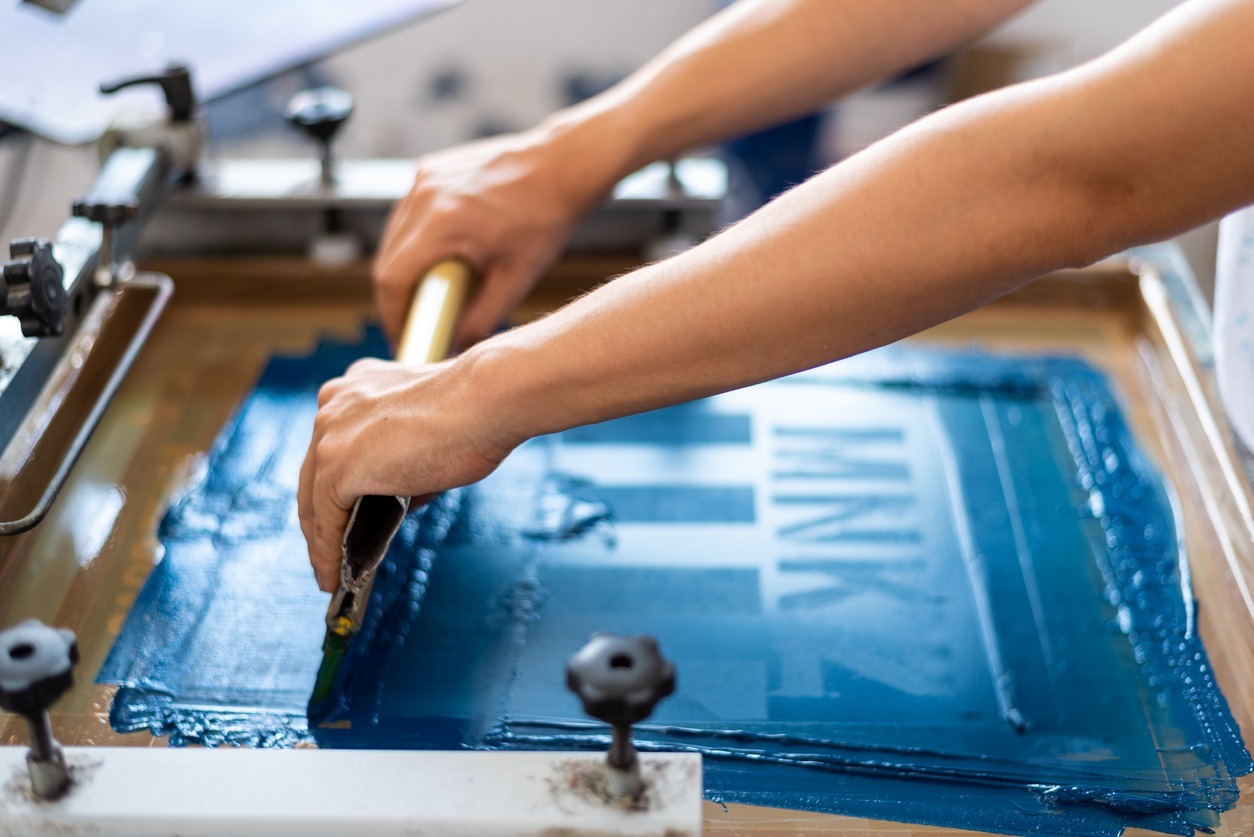
Screen printing uses a mesh screen and stencil to control where ink is applied. Each colour in the design requires a separate screen, and the layers are built one at a time.
The ink is pressed through the screen and onto the garment, then cured using heat. This curing process sets the ink and helps it bond to the fabric. If curing is not completed correctly, the print will break down more quickly during washing.
The thickness of the ink layer affects how the design behaves. Heavier layers create a solid finish but are more prone to cracking under repeated movement.
What types of garments suit screen printing?
Screen printing suits garments where flexibility and surface detail are more important than long-term durability. It works well on lightweight fabrics such as t-shirts, where the material moves freely and remains comfortable to wear.
It is often used for larger designs where the artwork needs to cover more space across the garment. This includes front and back prints, as well as designs that rely on multiple colours or fine detail.
This method is commonly used for promotional clothing, event wear, or items that are not worn daily.
What are the limitations of screen printing?
Printed designs sit on the surface, which makes them more vulnerable to wear.
Repeated washing causes gradual breakdown of the ink layer. Cracking tends to appear along fold lines where the fabric bends in the same place. Fading occurs as the ink loses strength with each wash.
Friction also affects printed designs. Areas that come into contact with equipment, tools, or repeated movement wear faster than other parts of the garment.
Stretching changes how the design behaves. As the fabric stretches, the printed layer stretches with it. Over time, this weakens the structure of the print and reduces clarity.
These issues become more noticeable on garments worn regularly, especially in working environments.
How does embroidery work on clothing?
How is the design stitched?
Embroidery uses a digitised stitch file to control how thread is applied. This file determines stitch direction, density, and sequence, which all affect the final result.
Different stitch types are used depending on the design. Larger areas are filled with patterned stitches, while borders and lettering use tighter stitching to maintain definition.
Stitch direction changes how light reflects from the thread. This helps the design remain visible from different angles, which improves clarity when viewed at a distance.
Thread tension is adjusted to match the fabric. If the tension is too high, the fabric can pull and distort. If it is too low, the stitching can appear loose and uneven.

What garments suit embroidery best?
Embroidery works best on garments with enough structure to support the stitching. Thicker fabrics provide a stable base, which helps the design maintain its shape over time.
This includes workwear, jackets, hoodies, and sweatshirts. These garments are often used in environments where durability is required, and the fabric needs to hold up under repeated use.
Embroidery also suits smaller design placements. Chest logos, for example, need to appear in the same position and size across multiple garments. Stitching provides the consistency required for this.
What are the limitations of embroidery?
Thread thickness limits how much detail can be reproduced. Very small text can lose clarity because letters become too close together once stitched.
Designs with fine lines or intricate detail often need to be simplified before production. Without adjustment, stitching can overlap or lose definition.
Embroidery also uses solid thread colours, which means colour gradients cannot be recreated. Designs that rely on shading or blending require printing instead.
Larger stitched areas increase density. On lighter fabrics, this can affect flexibility and make the garment feel heavier in the stitched section.
Which lasts longer: embroidery or printing?
Embroidery lasts longer under regular use. Because the design is stitched into the fabric, it is protected from surface wear. The stitching remains in place after repeated washing and does not break down in the same way as printed designs.
Printed designs depend on a surface bond. Over time, washing, heat, and friction weaken this bond, leading to cracking or fading.
The rate of wear depends on how the garment is used. Clothing worn daily in physical environments will show wear faster when printed. Embroidery maintains a consistent appearance for longer under the same conditions.
Which looks better on workwear?
The appearance of a design depends on how clearly it can be seen and how well it holds its shape.
Embroidery creates a raised surface with defined edges. This improves visibility, especially when staff need to be identified quickly. The structure of the stitching helps logos remain readable at a distance.
Printed designs create a flat finish. This works well for bold graphics but does not provide the same level of edge definition. Designs can appear less distinct when viewed from further away.
For workwear, where clarity and consistency matter, embroidery provides a more stable visual result.
Which is better for your logo or design?
The choice depends on how the design behaves when applied to fabric.
Embroidery suits designs with clear shapes and defined edges. Logos with simple layouts translate well into stitching and maintain their structure across different garments.
Printing suits designs with finer detail. It allows for multiple colours, thin lines, and complex layouts that cannot be recreated using thread.

Which is more cost effective?
Cost should be considered over the lifespan of the garment.
Embroidery requires more setup and stitching time, which increases the initial cost. The durability reduces how often garments need to be replaced.
Printing usually has a lower starting cost, especially for larger designs. Replacement costs can increase over time if the design wears down quickly.
For clothing used regularly, embroidery often provides better long-term value. For short-term use, printing can reduce upfront cost.
What should you choose for your business?
The correct choice depends on how your clothing is used in practice.
Clothing worn daily, washed frequently, or used in physical environments benefits from embroidery because it maintains structure and clarity over time.
Clothing used for events, promotions, or detailed designs benefits from printing because it allows for greater flexibility in design.
The method should match the way the garment is used. When this is done correctly, the design remains consistent, and the clothing performs as expected throughout its lifespan.
Can you combine embroidery and printing?
Using both methods on the same garment allows different parts of the design to perform different roles.
A common approach uses embroidery for smaller logos and printing for larger designs. This keeps the logo durable while allowing more detailed artwork on larger areas.
This approach works when a single method cannot meet both durability and design requirements.
Need help choosing between embroidery and printing?
The method used affects how your clothing performs after production. Design complexity, fabric type, and frequency of use all influence the result.
If you need embroidered clothing for workwear or branding, we offer an embroidery Birmingham service suited to different businesses and uses. We also offer screen printing in Birmingham. Contact us today for a free consultation.